Clear editorial architecture
Sections reflect your mission and audience questions. Navigation connects important information, documents and contact channels.
Digital presence
Clear information for every audience.
Editorial architecture, French/English and publishing autonomy.
Explore this offerIllustrative interface · example of use
The solution, explained
Institutions and organisations with several audiences and regularly published content.
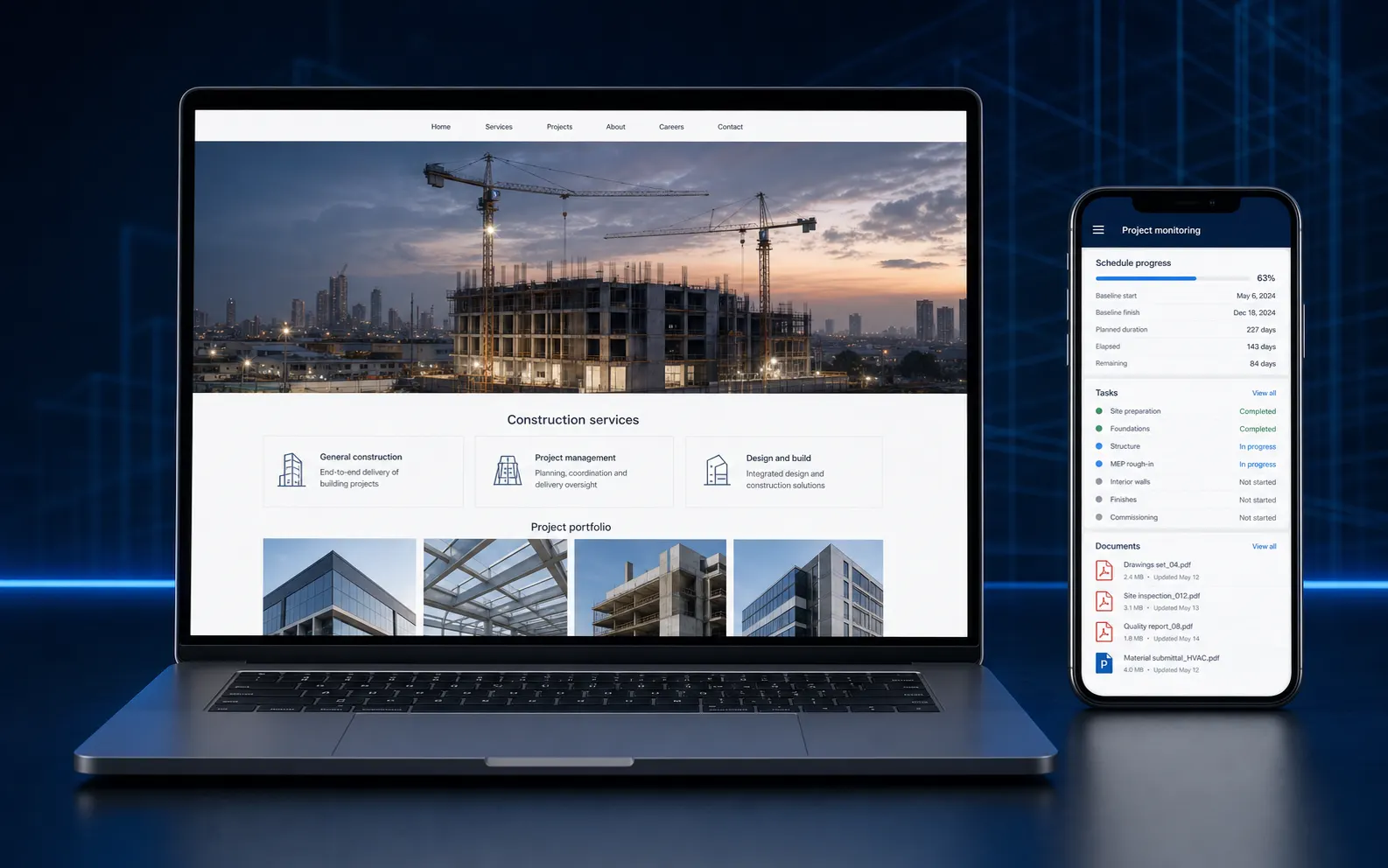
An institutional website organises an organisation’s information, news and resources. Its architecture helps each audience find relevant content in French and English.
Sections reflect your mission and audience questions. Navigation connects important information, documents and contact channels.
French and English versions share a clear structure. We define translated content, approval responsibilities and how updates are managed.
Content templates and editorial roles follow your team’s needs. News, documents and information pages are explored around your publishing requirements.

Illustrative scene · generated image
Your business guides the decisions
Organise institutional information for two language audiences and an editorial team.
The people using the software, available devices and how you work matter as much as functions. We discuss these constraints from the start.
Describe my needsBefore work begins
The published information and scoping points below prepare your proposal. Selected functions, their limits and delivery terms are confirmed in the quote.
We discuss your business, users and priorities. Content, access and constraints are identified before the proposal.
Journeys and interfaces make choices tangible. Agreed approvals guide development of the selected functions.
Checks and delivery follow the agreed criteria. Training and follow-up are defined for the project.
The price is taken from the published offer. Functions, volumes, required content and deliverables are confirmed in the proposal. This page explains possible uses of the solution.
Yes. Describe your business and important user journeys. We discuss adaptations, connections to existing tools and their effect on scope.
We identify available materials and what needs preparation during scoping. Responsibilities for copy, images, translation and access are set out in the proposal.
Training, maintenance and future changes are discussed with you. Third-party services and follow-up arrangements are clarified before work begins.
These case studies show needs and interfaces related to this expertise. Each project has its own scope and budget.